Happens Between Flights: How an Aircraft Turnaround Really Gets Done (From Gate to Next Departure)
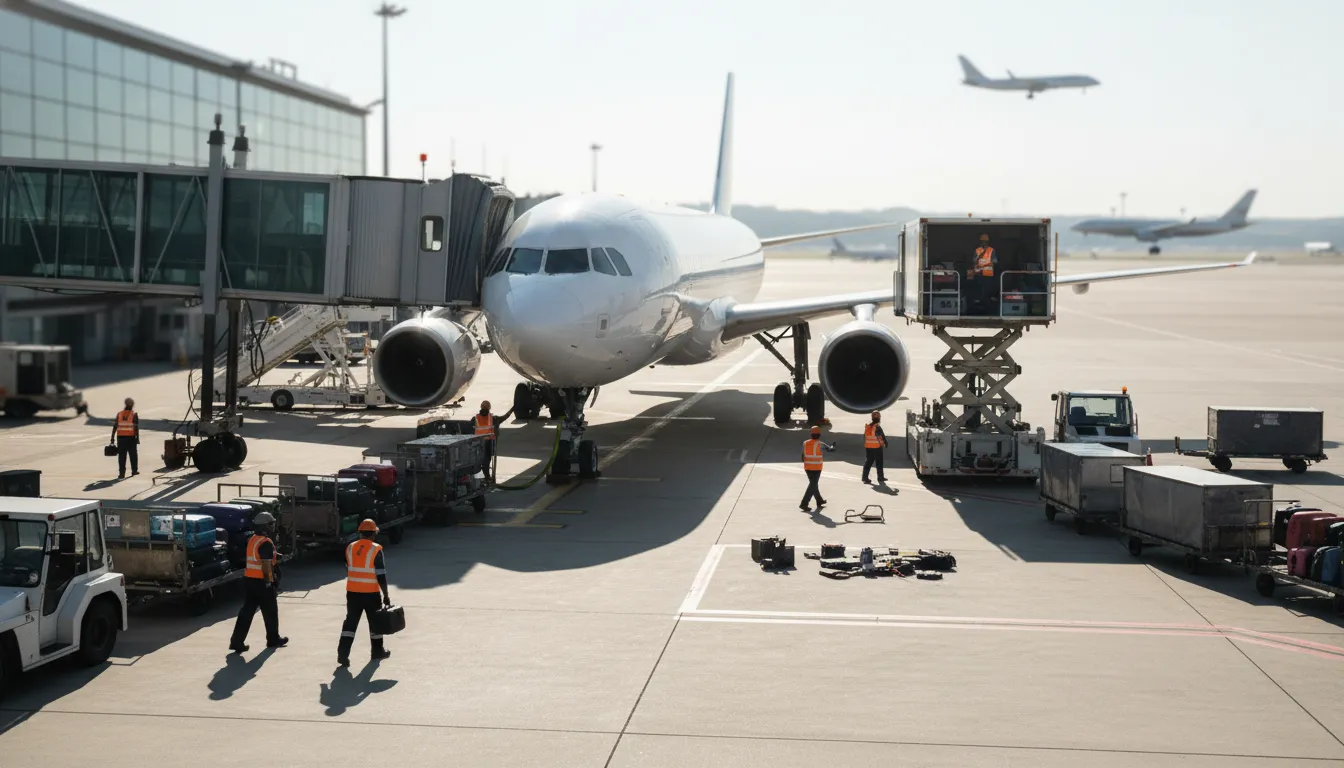
When people say “it is quick turnaround,” they usually mean the plane leaves on time. What many do not realize is what Happens Between Flights is a tightly controlled, minute-by-minute operation across multiple teams. From paperwork and gate alignment to engine checks, refueling, cabin readiness, and final security, every task has to land on schedule.
I have seen how the workflow comes together in real airport conditions, and I will break down the process in a practical, role-based way. If you want to understand what goes on before passengers board again, or if you work in travel operations and need a clear checklist mindset, this guide is for you.
Table of Contents
- 🛫 What “Happens Between Flights” Actually Means
- 🧭 Who Does What (Teams You Will Commonly See)
- ⏱️ The Turnaround Timeline: What Must Happen in Sequence
- 🧰 A Turnaround Coordination Checklist (Practical Framework)
- ⚠️ Common Misconceptions About What Happens Between Flights
- 🔍 Edge Cases That Change the Turnaround Plan
- 🤝 The Real “Secret”: Communication and Dependency Management
- ✅ Key Takeaways
- 📌 FAQ: What Happens Between Flights?
🛫 What “Happens Between Flights” Actually Means
Happens Between Flights is the period after an aircraft lands and before it departs again. During that window, the aircraft must be made ready for the next rotation while meeting safety, regulatory, and airline standards.
In practice, turnaround is not one job. It is a coordinated “service chain” with dependencies. Example: you cannot open the final boarding flow until the cabin is cleaned, doors are configured correctly, and final security checks are complete.
🧭 Who Does What (Teams You Will Commonly See)
Turnaround staffing is usually split into two broad sides of the aircraft: work that happens above the wing and work that happens below the wing. There is also an operational coordination layer that keeps everyone aligned.
Above the wing: passenger and cabin readiness
- Gate and boarding coordination: passenger processing, jet bridge or stair setup, door and boarding bridge alignment.
- Cabin service and cleaning: cabin cleaning, waste removal, restocking, and final cabin condition checks.
- Technical checks in visible areas: walk-around focus on general conditions until deeper checks occur.
- Flight operations coordination: final passenger data readiness, documents, and communication to pushback and departure timing.
Below the wing: ramp and cargo services
- Baggage handling: unload inbound bags and reload for the next flight.
- Cargo and manifest work: load planning based on cargo positions and documentation.
- Refueling and servicing: fuel truck connections and fueling operations.
- Aircraft ground power and utilities: external power and water hookups when needed.
Coordination layer: the “timekeeper”
This is the role that turns a target schedule into actionable steps. It tracks arrival timing, ensures the right resources are staged, and confirms prerequisites for opening doors, starting boarding, and final departure clearance.
⏱️ The Turnaround Timeline: What Must Happen in Sequence
Airlines use different procedures, but the dependency logic is consistent. Below is a practical, simplified flow for understanding what Happens Between Flights involves.
1) Arrival moments: start the clock
Right after landing, coordination activates. Key priorities are to prepare the gate configuration and ensure ground teams can begin tasks immediately.
- Align boarding equipment for the upcoming passenger flow.
- Set up external power and ground utilities if required.
- Dispatch ramp and service vehicles to the correct positions.
- Open communication channels so technical and service teams report status quickly.
2) Door operations and aircraft preparation
Doors and access points are controlled. Before passenger movement begins, the aircraft must be confirmed safe to service and configured for ground tasks.
- Confirm aircraft exterior and wing areas are clear for service operations.
- Verify safety constraints for access routes and equipment positions.
- Ensure any service interfaces (such as external connections) are correctly managed before boarding.
3) Passenger unloading, then cabin reset
As passengers disembark, the cabin reset phase begins in parallel. This is one of the busiest coordination moments because passenger flow and cabin turnaround must not conflict.
- Cabin team cleans and prepares for the next group.
- Galley and cabin items are restocked or checked.
- Any known defects from the aircraft’s records are addressed by maintenance teams as needed.
4) Technical walk-around and defect resolution
Maintenance teams typically perform inspection routines that focus on areas likely to show wear, damage, or leaks during operation.
- Engine and nacelle area checks for condition and visible anomalies.
- Wheels and brakes inspection for signs of abnormal wear or contamination.
- Doors, seals, panels, and fairings checks where applicable.
- Review of technical log entries and resolution of open items where possible.
When a defect cannot be cleared quickly, the process can expand to additional checks and part logistics. This is one reason turnaround timing is so sensitive.
5) Loading and servicing: cargo, baggage, refuel, utilities
While cabin work continues above the wing, ramp teams service the aircraft below the wing and reload the aircraft for the next departure.
- Unload inbound baggage and reload outgoing bags.
- Handle cargo according to manifest and loading positions.
- Fuel operations with strict safety procedures and correct fuel quantity verification.
- Confirm ground power and other utilities are correctly connected or removed when no longer needed.
6) Final cabin security and departure readiness
Before boarding starts, the aircraft must pass final readiness checks. This includes the cabin state, document readiness, and confirmations for doors and equipment.
- Final cabin inspection for cleanliness, items, and proper setup.
- Confirm no outstanding issues prevent passenger boarding.
- Finalize passenger loading readiness and communicate the boarding sequence to operations.
7) Boarding begins, then pushback or departure
Once all prerequisites are confirmed, boarding is opened. After boarding closes and departure checks complete, the aircraft can be released for pushback and takeoff.
The key point of Happens Between Flights is that boarding is not “the start.” It is a milestone that only happens after multiple teams have already verified their parts.
🧰 A Turnaround Coordination Checklist (Practical Framework)
If you want a simple mental model, use this framework: Safety, Access, Readiness, Timing, Proof.
Safety
- Are service vehicles positioned safely and with correct access routes?
- Are any safety constraints tied to doors, equipment, or utilities understood?
Access
- Are bridge/stair or door configurations set correctly?
- Is the cabin accessible when needed without interrupting passenger flow?
Readiness
- Is the cabin cleaned and set for the next passengers?
- Have baggage, cargo, and refueling steps reached completion?
- Are maintenance checks complete to the required level?
Timing
- What is the “latest safe” time to complete each critical step?
- Which tasks can run in parallel, and which depend on each other?
Proof
- What confirmations or records indicate each step is completed?
- Are any open defects or service blockers documented and resolved?
⚠️ Common Misconceptions About What Happens Between Flights
Many assumptions make turnaround sound simpler than it is. Here are frequent misunderstandings and the reality behind them.
“Turnaround is just cleaning and boarding.”
Cleaning and boarding are only part of the process. Happens Between Flights includes operational coordination, technical inspections, fuel and utilities, and loading. Boarding is a late-stage milestone.
“If the plane landed, it will definitely depart on time.”
Delays can come from technical findings, cargo or baggage handling constraints, refueling timing, or staffing and equipment positioning. Even small issues can ripple through a short turnaround window.
“Above-the-wing and below-the-wing work do not interact.”
They interact constantly. A delay below the wing can delay cabin readiness sign-off, which then delays boarding and pushes departure later than planned.
🔍 Edge Cases That Change the Turnaround Plan
Some turns are routine, while others require escalation. Understanding these edge cases helps explain why turnaround variability exists.
- Unexpected defects: maintenance may need additional inspection time or part replacement, extending the cycle.
- Refueling or utility complications: fuel planning, access limitations, or equipment issues can shift schedules.
- Cargo priority handling: certain loads can require extra steps or specific handling constraints.
- Gate constraints: limited equipment or competing aircraft at the gate can reduce flexibility.
- Late arrival: less buffer time forces teams to compress tasks, increasing coordination pressure.
🤝 The Real “Secret”: Communication and Dependency Management
The fastest turnaround operations share one trait: they manage dependencies like a system. When each team reports status quickly and follows the required sequence, the aircraft can move from landing to departure without bottlenecks.
That is the core of Happens Between Flights: not just doing tasks, but doing them in the right order, with the right confirmations, at the right time.
✅ Key Takeaways
- Happens Between Flights is a coordinated operation spanning passenger readiness, maintenance inspection, ramp services, and final release.
- Work is typically split into above-the-wing and below-the-wing teams, with a coordination layer managing timing.
- Boarding is a milestone, not the beginning. It only starts after safety, cabin readiness, and operational prerequisites are confirmed.
- Delays usually come from technical findings, servicing constraints, or dependency failures across teams.
📌 FAQ: What Happens Between Flights?
How long does an aircraft turnaround usually take?
It varies by aircraft type, airport, staffing, and route schedule. Some turnarounds are under two hours, while others are longer to allow deeper servicing, more complex loading, or additional checks.
Why does boarding not start immediately after passengers disembark?
Because cabin reset, technical sign-offs, loading and servicing completion, and safety checks must happen first. Boarding requires the aircraft to be in a confirmed ready state.
Are maintenance checks always completed during turnaround?
Routine walk-around and log review are often part of turnaround. If something needs deeper investigation or corrective action, it can extend the turnaround beyond the planned window.
What tasks are typically done above the wing?
Cabin cleaning and preparation, passenger boarding readiness, galley checks, and operational coordination activities related to boarding and cabin condition.
What tasks are typically done below the wing?
Baggage and cargo unloading and loading, refueling, ground power and utility hookups, and other ramp services that support the next departure.
What is the biggest factor that affects whether a flight departs on time?
Dependency timing. If one critical step (technical clearance, refueling, loading completion, or final security checks) slips, it often delays subsequent milestones like boarding and final departure release.
Related Reading
If you’re interested in aviation/travel-adjacent operational thinking (and staying secure while traveling), you may also like:
- SIM card security tips for travelers.
- WhatsApp account protection reminders.
- Tourist SIM cybersecurity guidance.


Comments
Post a Comment