Interview with a Florida Cost Expert, Practical Breakdown of the COST Of Living In Florida
Interview with Florida Cost Expert: Cost of Living Guide 2026
Your ultimate roadmap to understanding real expenses for housing, utilities, insurance, taxes, and more in the Sunshine State.
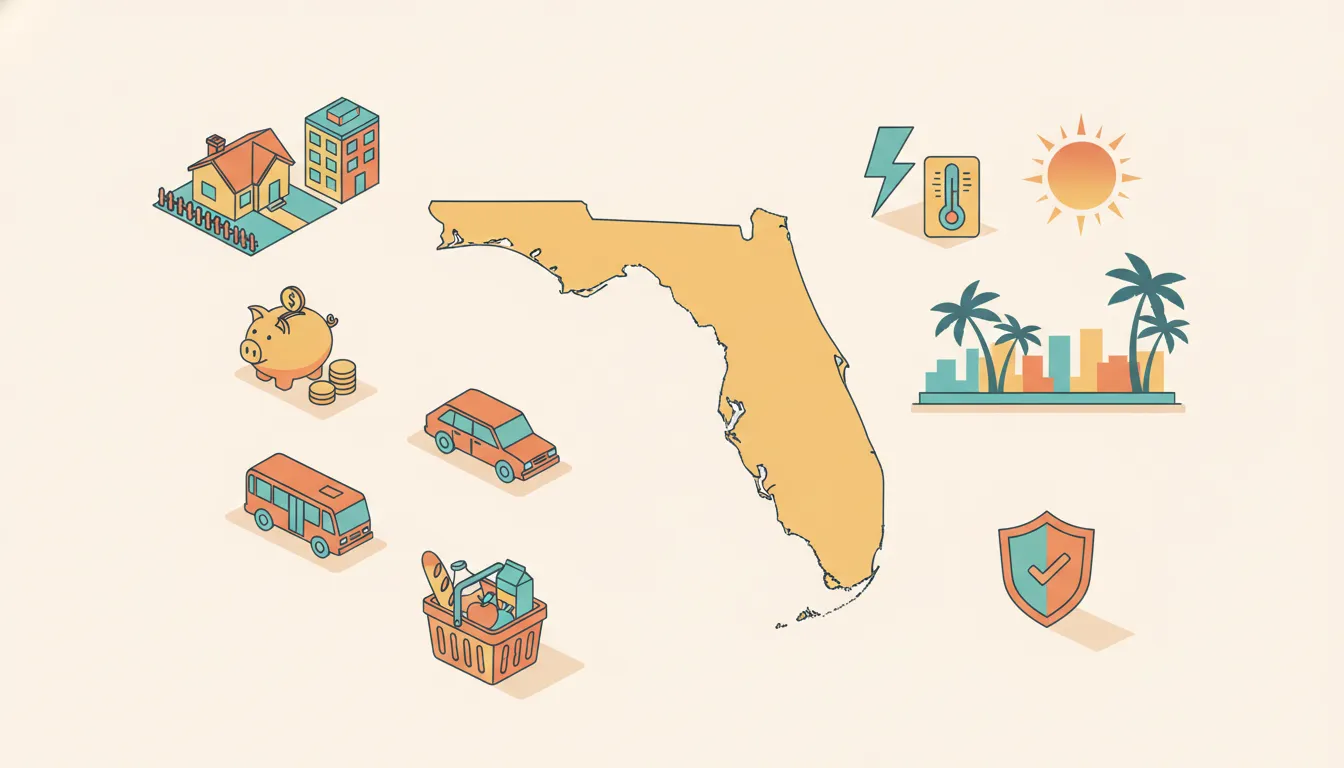
The COST Of Living In Florida varies widely by city, household size, and lifestyle. This interview-style guide answers the questions people ask most often when planning a move or budgeting for life in the Sunshine State. Read on for concrete examples, common pitfalls, regional comparisons, and actionable money-saving tips.
About the Interview
This interview format presents concise questions and expert-style answers to help you understand real expenses for housing, utilities, groceries, transportation, insurance, taxes, and more. The goal is practical clarity so you can estimate your monthly budget and avoid surprises.
Quick Overview: What to Expect
Key drivers of the COST Of Living In Florida include housing costs (rent or mortgage), homeowners and auto insurance, utility bills (especially air conditioning in summer), groceries, and regional tax rules such as no state income tax. Below you will find direct answers to the most common questions, plus regional comparisons and a plan you can adapt to your situation.
📊 Cluster Topics (Subtopics & Supporting Content)
- Breakdown of Expenses
- Housing Costs in Florida: Renting vs. Buying
- Average Utility Bills Across Major Cities
- Transportation Costs: Public Transit, Gas, and Car Insurance
- Grocery Prices and Food Expenses in Florida
- Healthcare Costs: Insurance and Out-of-Pocket Expenses
- Regional Comparisons
- Cost of Living in Miami vs. Orlando vs. Tampa vs. Jacksonville
- Cheapest Places to Live in Florida
- Most Expensive Cities in Florida
- Lifestyle Factors
- Entertainment and Leisure Costs (Dining, Attractions, Nightlife)
- Education Expenses: Public vs. Private Schools & Universities
- Retirement Living: Budgeting for Seniors in Florida
- Economic Factors
- Minimum Wage and Average Salaries in Florida
- Taxes in Florida: State Income Tax, Property Tax, Sales Tax
- Job Market Overview & Employment Opportunities
- Moving to Florida
- Moving Costs & Tips for Relocating to Florida
- Best Neighborhoods for Families, Young Professionals, Retirees
- Comparisons with Other States
- Cost of Living: Florida vs. California
- Cost of Living: Florida vs. Texas
- Cost of Living: Florida vs. New York
- Hidden & Unexpected Costs
- Homeowner's Insurance & Hurricane Preparedness Expenses
- Water Bills and Environmental Fees (Flood Zones, etc.)
- HOA Fees and Community Charges
- Money-Saving Tips
- How to Save Money While Living in Florida
- Affordable Hobbies & Activities for Residents
Interview: Your Top COST Of Living In Florida Questions Answered
What is the typical housing cost and how does buying compare to renting?
Housing is the single largest factor in the COST Of Living In Florida. Median home prices vary by metro but a good mid-2020s benchmark is in the low-to-mid $400,000s for many coastal and near-coastal markets. Mortgage payments depend on sale price, down payment, mortgage type, and interest rate. With current interest rates, a purchase near $450,000 can produce monthly mortgage payments (principal, interest, taxes, insurance) in the range of $3,500 to $4,500 for many buyers.
Renters will see wide variation. A one-bedroom in a city center can cost $1,500 to $2,500 monthly in major metros; suburban three-bedroom rentals commonly range from $2,000 to $3,500.
How much should I budget for utilities and internet?
Utilities in Florida often run higher in summer due to air conditioning. Budget guidelines:
- Electricity: plan for $200 to $450/month for a typical single-family home; $350 is a useful average where AC runs heavily.
- Water: expect $60 to $160/month depending on household size, irrigation, and pool usage.
- Trash and recycling: $20 to $50/month unless HOA covers it.
- Internet: $60 to $120/month for high-speed residential fiber or cable service; $100 is a common figure for fast home internet.
Including all utilities, a family can expect $400 to $700/month on average, with seasonal spikes during hot months.
How much do groceries and dining cost monthly?
Grocery spending depends heavily on family size and food preferences:
- Single person: $250 to $450/month.
- Couple: $400 to $800/month.
- Family of four or five: $1,000 to $2,500/month depending on preferences and whether organic meats/produce are prioritized.
Dining out is separate. A couple of mid-range dinners per month might add $100 to $300; frequent dining and weekend outings can add several hundred dollars more.
Is auto insurance expensive in Florida?
Auto insurance in Florida is generally above the national average. Factors that drive costs include population density, high claim frequency, and no-fault rules for personal injury protection. Typical annual premiums can range from $1,200 to $4,000+ per vehicle depending on driving history, coverage levels, and location. Households with two vehicles sometimes see combined premiums of $2,500 to $5,000 per year.
What about homeowners insurance and hurricane-related costs?
Homeowners insurance is a key influence on the COST Of Living In Florida. Coastal exposure and hurricane risk mean higher premiums in many areas. Typical homeowners insurance premiums could range from $1,200 to $4,000 annually for single-family homes. Flood insurance is separate and required for properties in designated flood zones, potentially adding hundreds to thousands of dollars per year.
How do taxes affect the COST Of Living In Florida?
Florida has no state income tax, which is a major advantage for many households and high earners. Sales tax varies by county (state baseline is 6%), and property taxes depend on local assessments. Homestead exemptions can lower property tax bills for primary residences. For retirees or people moving from high-tax states, the lack of state income tax often offsets higher insurance and housing costs.
How much does healthcare cost in Florida?
Healthcare costs depend on coverage and providers. On average, some metrics show healthcare expenses slightly below national averages, but individual circumstances vary. As a rough planning range, expect monthly premiums of several hundred dollars per adult for individual plans and higher for family coverage if not employer-subsidized.
What are typical childcare and education costs?
Childcare varies from low-cost relative options to premium private centers. Registered daycare centers commonly charge between $600 and $1,200/month per child. Premium or specialized daycare and private schools can cost significantly more—$1,500 to $3,000+/month in some private-school markets. Public schools are free for residents.
How does the COST Of Living In Florida compare across regions?
Regional differences are significant:
- Miami: generally the most expensive in housing and lifestyle costs, especially in desirable neighborhoods.
- Tampa Bay: coastal suburbs can be costly; inland suburbs and smaller towns are more affordable.
- Orlando: moderate to high housing demand near tourist and job centers; diverse pricing across metro areas.
- Jacksonville: often more affordable housing and lower overall COST Of Living for comparable lifestyles.
What hidden costs should I plan for when moving to Florida?
Hidden and often overlooked costs include:
- Flood insurance and elevated premiums for homes in flood zones.
- Higher homeowners insurance and wind/hurricane deductibles.
- Higher water bills for pools, irrigation, and heavy laundry use.
- HOA fees in planned communities.
- Elevator or condominium reserves for condo owners.
- Increased maintenance costs for yards, pools, and pest control due to the subtropical climate.
Practical example: estimated monthly budget for a family of five
Sample blended estimate for a family of five (suburban, not ultra-luxury):
- Mortgage/rent: $3,500 to $4,200
- Utilities (electric, water, trash, internet): $450 to $700
- Groceries: $1,200 to $2,000
- Auto payments and insurance: $600 to $900 (auto payments) + $200 to $400/month insurance equivalent
- Cell phones and subscriptions: $150 to $300
- Pool and lawn maintenance: $100 to $200
- Childcare/activities: $150 to $1,000+ per child depending on need
- Savings, retirement, debt repayment: aim for 15% to 20% of gross income
This totals roughly $6,000 to $10,000/month depending on choices and local costs.
How should I evaluate neighborhoods and avoid insurance surprises?
Steps to evaluate neighborhoods and insurance risk:
- Check flood maps and FEMA flood zone designations for any address.
- Ask sellers/agents for recent insurance premiums and claims history for the property.
- Compare quotes from multiple insurance carriers early in the home search.
- Consider elevation and distance from coastlines; small elevation differences can change flood insurance needs significantly.
- Investigate local building codes and hurricane-hardening in the home (impact windows, roof condition).
Are there reliable ways to lower the COST Of Living In Florida?
Yes. Practical cost-saving strategies:
- Claim the homestead exemption to reduce property taxes for primary residences.
- Bundle homeowners and auto insurance with one company for discounts.
- Shop multiple mortgage lenders and consider larger down payments to reduce monthly costs.
- Compare grocery stores and buy bulk or warehouse items for large families.
- Use programmable thermostats and energy-efficient HVAC to reduce electricity bills.
- Take advantage of seasonal, resident, and community discounts for attractions and sports.
What are common mistakes people make when budgeting for a move to Florida?
Top mistakes to avoid:
- Underestimating summer electricity costs when air conditioning runs constantly.
- Not factoring in flood and hurricane-related insurance or higher deductibles.
- Assuming coastal proximity always requires flood insurance—elevation and local flood maps matter.
- Failing to shop multiple auto and homeowners insurers for the best rates.
- Ignoring HOA fees and community assessments until after purchase.
Commonly Asked Comparative Questions
How does the COST Of Living In Florida compare to California, Texas, and New York?
Comparison highlights:
- California: generally higher housing, higher state income tax, and often higher living expenses—Florida is typically less expensive for housing and has no state income tax.
- Texas: similar in that Texas has no state income tax; housing tends to be cheaper in many Texas markets but coastal insurance can be lower in some Texas areas versus Florida.
- New York: upstate New York can be cheaper than many Florida coastal metros, but New York City area is far more expensive; Florida offers no state income tax and warmer year-round climate.
Final Thoughts and a Checklist to Prepare
When planning a move or a new budget for the COST Of Living In Florida, use this quick checklist:
- Determine your priority: proximity to coast, school quality, commute time, or price.
- Run housing affordability numbers: include mortgage, taxes, insurance, and HOA fees.
- Get insurance quotes early—home and auto—and confirm flood zone requirements.
- Estimate seasonal utility bills and account for higher summer electricity use.
- Plan for childcare, groceries, and transportation in your new city's context.
- Factor in one-time moving and hurricane-preparedness expenses.
FAQ
Is Florida inexpensive to live in?
Florida can be less expensive than high-tax, high-cost states for take-home pay because there is no state income tax. However, local costs like housing, homeowners insurance, and utilities can be high—especially near the coast—so overall affordability depends on location and lifestyle.
Do I need flood insurance in Florida?
Flood insurance is required if your mortgage is backed by a federal lender and the property is in a designated flood zone. Even if it is not required, flood insurance is often advisable for low-elevation or coastal properties. Check FEMA maps and get a professional quote for exact costs.
How much should I save before moving to Florida?
Save for moving costs, at least 3 to 6 months of emergency living expenses, initial deposits for utilities, renters insurance or homeowners closing costs, and an additional buffer for hurricane preparedness. Exact amounts depend on whether you buy or rent and your family size.
Are utilities much higher in Florida than other states?
Electricity can be higher due to extensive air conditioning use. Water costs can increase with pools and irrigation. Overall utility bills may be higher in summer months but lower in winter compared with colder states that pay for heating.
Can I find affordable housing in Florida?
Yes. Affordable options exist, especially inland, in smaller towns, and in neighborhoods farther from major tourist or coastal centers. Narrow your search to suburbs and metros with lower demand, and consider older homes that may need renovation but cost less.
Summary
The COST Of Living In Florida is highly situational. Housing and insurance are the most variable inputs, utilities are seasonally sensitive, and groceries and childcare scale with family size. Use the ranges and checklist above to estimate your monthly budget and start with insurance quotes and flood map checks early in the planning process. With careful planning, many households can take advantage of Florida's no state income tax while managing living costs to match their priorities.


Comments
Post a Comment